Travel audio systems face a problem that living-room speakers never encounter: the listening environment is always moving. A car cabin, an aircraft fuselage, and a boat deck each resist sound in different ways, and solving one problem rarely solves another. Meridian Audio has spent decades applying proprietary digital signal processing across automotive, aviation, and marine work, and comparing the three shows how differently each setting shapes the final result.
The Acoustic Demands of Automotive Sound: Engine Noise and Interior Design
A car cabin is a small, irregular space filled with glass, fabric, and hard trim, all of which bounce sound unpredictably. Engine noise, road rumble, and wind resistance compete constantly with whatever plays through the speakers. Meridian Audio has worked with automotive brands for decades to counter this, tuning systems so dialogue and music stay clear even as speed and road surface change. One notable addition is Vibrohaptic Audio, which generates tactile signals from the audio itself and transmits them through the seat, adding a physical dimension that cabin speakers alone cannot provide.
Meridian’s Approach to Aviation Audio: Overcoming Cabin Pressure and Engine Interference

Aircraft cabins introduce challenges that cars rarely face, including pressurization, engine drone at altitude, and the acoustic properties of aviation-grade materials. Meridian Audio has worked with airlines and private aviation companies to keep in-flight listening pleasant despite these conditions. Cabin pressure changes the way sound waves travel, and engine interference sits in frequency ranges that can mask dialogue or music if left unaddressed. Because of this, aviation work demands a different calibration approach than automotive work, even when some underlying technology is shared.
Marine Audio Systems: Engineering for Salt, Moisture and Open-Water Conditions
Open water presents its own demanding set of conditions, from constant moisture and salt exposure to the unpredictable acoustics of an open deck. Meridian Audio brings decades of psychoacoustic research and engineering expertise to marine installations, addressing both environmental durability and sound quality. Unlike a sealed car cabin or a pressurized aircraft fuselage, a boat deck has no consistent boundaries for sound to reflect from, which changes how systems need to be tuned. That combination of exposure and open acoustics makes marine travel audio systems a distinct engineering category of their own.
Proprietary Digital Signal Processing Across Travel Environments

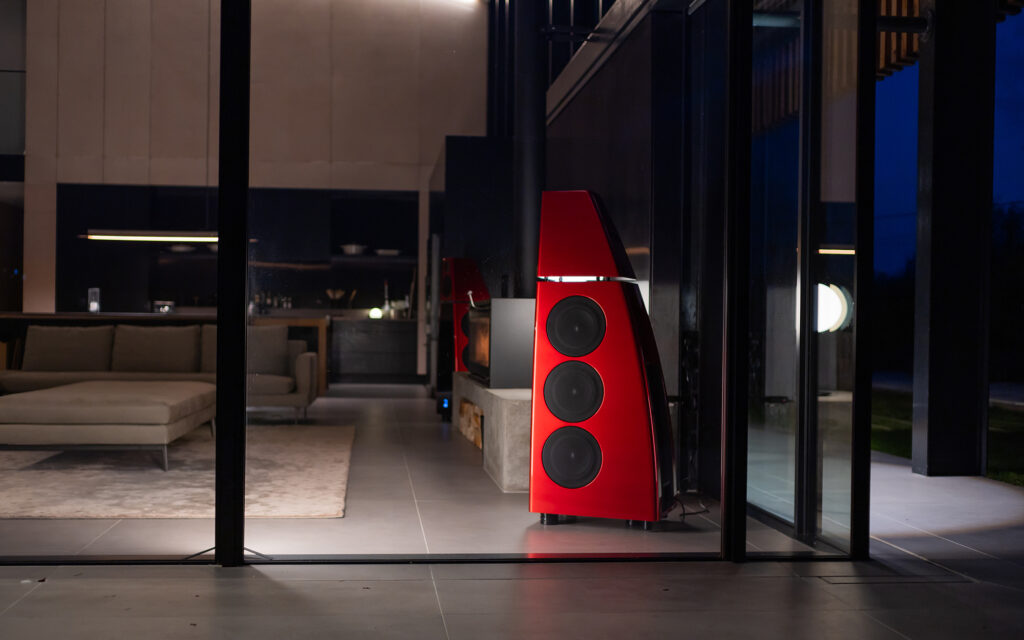
In the luxury home audio range, this same signal processing pairs with refined industrial design to deliver consistent, high-performance results. The lifestyle division works from concept to creation as well, tailoring each solution to the moment and place where someone listens, which suggests a similar bespoke mindset carries into road, sky, and sea projects. The underlying philosophy, engineering sound to fit its environment rather than forcing one solution everywhere, carries across every travel context. As a result, the brand treats road, sky, and sea installations as related but separate engineering problems rather than variations of a single fixed template.
Active Loudspeaker Technology in Motion: What Distinguishes Meridian’s Travel Audio

Meridian Audio is a manufacturer of active loudspeakers, a category where amplification sits inside the speaker itself rather than in separate components. This matters for travel audio systems because integrated designs package more efficiently into the tight, irregular spaces found in cars, aircraft, and boats. At the higher end of the home range, technologies such as High-Power Array processing address interference between multiple stacked speakers, keeping sound distribution even across a listening area. While HPA is described in the context of luxury home installations, it illustrates the broader engineering mindset carried into every environment the brand works in.
Decades of Psychoacoustic Research: How Meridian Refines Sound for Movement

The brand’s history stretches back nearly five decades, built on what it describes as curiosity, independence, and a willingness to challenge convention. That history underpins continued work across automotive, aviation, marine, lifestyle, and residential sectors, with each environment drawing on a shared body of psychoacoustic research. Travel audio systems benefit specifically from this accumulated knowledge, since movement, vibration, and changing cabin conditions all interact with how sound gets perceived. The list below outlines the environmental factors that most directly shape the approach taken in each setting.
- Road travel introduces constant engine noise and road vibration that can mask lower frequencies inside a car cabin.
- Interior materials such as glass, fabric, and hard trim affect how sound reflects within a vehicle.
- Aircraft cabins are pressurized, which changes the way sound waves travel compared to ground-level environments.
- Engine interference in aviation settings sits in frequency ranges that can obscure dialogue or music if left unmanaged.
- Marine environments expose equipment to salt and moisture that ground-based systems never have to withstand.
- Open decks lack the enclosed boundaries that help define sound reflection in a car or cabin.
These environmental differences serve as the starting point for every project, rather than a single fixed approach applied across the board. That distinction is what separates genuinely adaptive travel audio systems from ones simply resized to fit a new space. Whether the setting is a vehicle interior, an aircraft cabin, or an open-water deck, the underlying engineering question stays the same: how to preserve sound quality against a hostile acoustic backdrop.
Sound in motion will likely keep posing new challenges as materials, cabins, and vessels continue to evolve.